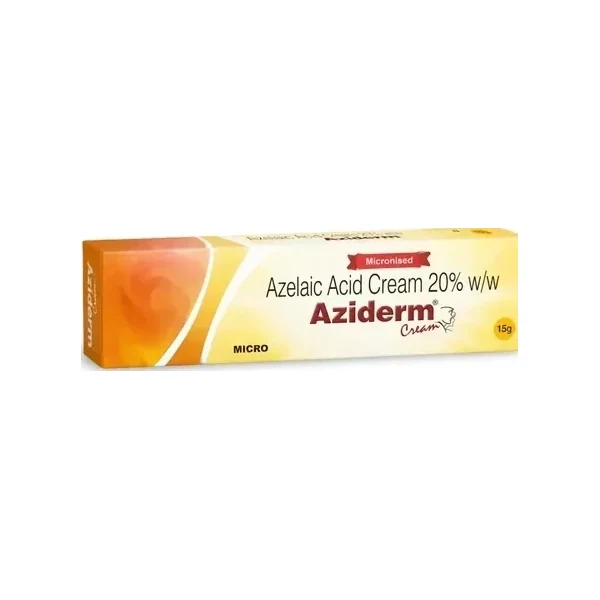
1. Description of Aziderm 20% Cream (15 g)
Aziderm 20% cream is a prescription-only topical acne treatment that is primarily used for Acne Vulgaris (pimples). Its active ingredient is Azelaic Acid (20% w/w), an FDA-approved topical anti-acne from the dicarboxylic acid medication class. Micro Labs Ltd. manufactures this acne treatment cream in a GMP-compliant facility.
Azelaic Acid stops the development of acne-causing bacteria, reduces skin irritation, and prevents blocked pores. It also helps some people improve their post-acne marks and uneven skin tone. Common applications include Acne Vulgaris, blackheads, whiteheads, Rosacea management, and acne-related pigmentation.
Apply a thin layer to clean, dry skin twice daily as directed by your doctor. If you miss a dose, apply it as soon as you recall, unless it is almost time for the next application. Never apply an extra quantity to compensate for a missed dose. Overuse can increase skin irritation; obtain medical advice if excessive amounts are applied or accidentally swallowed.
Possible side effects include burning, itching, redness, dryness, peeling, and irritation at the application site. Reach out to your doctor if you develop swelling, rash, or signs of an allergic reaction.
Do not use Aziderm if you are hypersensitive to Azelaic Acid or any of its ingredients. Inform your doctor about other topical acne treatments, exfoliants, or skin products, as they could increase irritation. Do not apply to sunburned, dry, chapped, or broken skin.
Use cautiously in patients with Asthma, severe Eczema, or highly sensitive skin. Store below 25°C, away from heat, moisture, and direct sunlight.
Aziderm 20% cream contains the same active ingredient, Azelaic Acid, as Finacea, the well-known branded topical treatment for acne and rosacea. Generic Azelaic Acid creams, such as Aziderm, must demonstrate comparable skin penetration and effectiveness to the branded product before being approved for use. Aziderm is manufactured by Micro Labs Ltd in a GMP-compliant facility, while Finacea is produced by Bayer under similarly regulated manufacturing standards.
The key differences typically involve the manufacturer, cream texture, and price, rather than how the active ingredient works on the skin. Generic options such as Aziderm are often a more affordable choice for long-term acne or rosacea management. Always consult a dermatologist before switching between branded and generic Azelaic Acid creams.
Aziderm 20% cream contains Azelaic Acid and is primarily prescribed to treat acne by reducing bacteria, inflammation, and clogged pores. It could also help improve post-acne marks, uneven skin tone, and certain Rosacea symptoms when recommended by a healthcare expert.
Mild burning, stinging, or irritation can occur when starting treatment. If these symptoms occure, reduce the frequency of application, use a gentle moisturizer, and avoid harsh skincare products. If irritation becomes severe, persistent, or causes significant discomfort, consult your healthcare provider promptly.
2. How Aziderm 20% Cream (15 g) Works
Aziderm cream includes Azelaic Acid, which penetrates the skin and inhibits the development of acne-causing bacteria. It promotes the regular shedding of skin cells inside pores, reducing blockages that can contribute to blemishes. Azelaic Acid has anti-inflammatory effects that help reduce skin redness and inflammation. Furthermore, it reduces excess melanin synthesis, enhancing the overall skin appearance and promoting a cleaner, more even complexion with continued use.
When used as directed, this anti-acne skincare product can provide the following benefits:
- Reduces inflammation and visible redness.
- Repairs pore blockage by controlling skin cell turnover.
- Supports a smoother, clearer skin texture.
- Helps to reduce the appearance of post-inflammatory marks.
- When recommended, this topical therapy is appropriate for long-term use.
- Non-steroidal formulation with targeted skin action.
Aziderm 20% cream typically begins working within a few days of regular use, as Azelaic Acid starts reducing surface bacteria and calming inflammation early in treatment. Visible improvement in acne bumps and redness usually appears within 2 to 4 weeks, while noticeable fading of post-acne marks and uneven skin tone can take up to 4 to 6 months of consistent application.
Applying the cream on clean, dry skin helps it absorb properly, and skipping applications can slow overall progress. Individual results may vary based on skin type, acne severity, and how consistently the cream is used. Consult a healthcare professional for personalized guidance on timing.
Apply Aziderm cream exactly as directed by your dermatologist (skin doctor) to get the optimal results. Some general usage guidelines are:
- Use the cream at regular intervals to maintain consistency.
- Gently clean and dry the affected skin region before application. Apply the prescribed dosage to the affected skin. Gently rub it in until absorbed.
- Prevent contact with the eyes, mouth, and broken skin.
- Use it twice daily, preferably in the morning and evening, or as suggested by your doctor.
3. Mechanism of Action
At the cellular and biochemical level, Azelaic Acid interacts selectively with specific physiological receptors and enzymatic pathways responsible for regulating targeted therapeutic pathways.
By modulating these targeted pathways, Aziderm 20% Cream (15 g) restores balanced physiological response without unnecessary systemic burden when taken at the physician-recommended dose.
4. Dosage and Administration of Aziderm 20% Cream (15 g)
4.1 Recommended Dosage
The standard medical recommendation for Aziderm 20% Cream (15 g) is tailored according to patient tolerance, therapeutic response, and clinical evaluation. Always adhere to professional healthcare provider recommendations to minimize adverse events.
4.2 How to Take
- Use strictly on the affected area or as directed by your ophthalmologist/physician.
- Wash and dry your hands thoroughly before and after each application.
- Avoid contact with eyes, mouth, or broken skin unless specifically formulated for ophthalmic use.
4.3 When to Take
Apply at evenly spaced intervals as prescribed on your medication label. Do not apply extra quantities to make up for a missed dose.
4.4 Who Can Use
✔ Suitable For:
- Adult patients diagnosed with conditions requiring Azelaic Acid.
- Individuals evaluated by a licensed healthcare provider for Acne & Skin Care therapy.
- Patients with verified tolerance to the prescribed strength.
✖ Not Suitable For:
- Individuals with known hypersensitivity or allergy to Azelaic Acid.
- Patients taking contraindicated or interacting therapies without physician approval.
- Patients with unstable cardiovascular, severe hepatic, or renal conditions unless cleared by a specialist.
- Pediatric patients under 18 years unless explicitly prescribed.
5. Side Effects and Warnings
While Aziderm 20% Cream (15 g) is clinically evaluated and well-tolerated, systemic physiological responses may vary:
Frequently observed side effects of this pimple treatment include:
- Itching
- Burning sensation
- Skin irritation
- Redness
- Xerosis (severe dry skin)
These effects are mild and tend to disappear over time, as your body adapts to the medication. Contact your healthcare provider if they do not improve or intensify.
Yes, Aziderm can cause side effects such as burning, itching, redness, dryness, peeling, or tingling at the application site. These reactions are usually mild and temporary. Get medical attention if you experience severe irritation, swelling, or signs of an allergic reaction.
6. Precautions & Drug Interactions
Liver Disease
Azelaic Acid is applied topically and has minimal absorption into the bloodstream, making significant liver-related effects unlikely. No specific dose adjustments are generally required for patients with liver disease. However, it should be used under strict medical supervision in cases of severe liver conditions.
Kidney Impairment
Since Azelaic Acid is minimally absorbed through the skin, kidney impairment rarely requires dose changes. It is safe for topical use if prescribed by a skin doctor, though patients with serious kidney disease should still consult a dermatologist before use.
Pregnant and Breastfeeding women
Azelaic Acid is usually considered safe during pregnancy and breastfeeding when used as directed. However, pregnant or breastfeeding women should consult a dermatologist before starting treatment to ensure safe use.
Avoid
Alcohol does not have a major direct interaction with Azelaic Acid, but it should be avoided, as it is not good for general health. Avoid use in areas affected by viral skin infections, including cold sores, shingles, or chickenpox, unless advised by a healthcare provider.
7. Storage and Handling
Store Aziderm 20% Cream (15 g) blister packs at controlled room temperature between 15°C to 30°C (59°F to 86°F). Keep protected from excessive heat, bathroom moisture, and direct sunlight. Retain in original factory packaging until consumption and keep strictly out of reach of children and pets.
8. Frequently Asked Questions (FAQs)
Q: What is the active ingredient in Aziderm 20% Cream (15 g)?
A: Aziderm 20% Cream (15 g) is formulated with Azelaic Acid as its active pharmaceutical ingredient and is manufactured in WHO-GMP certified pharmaceutical facilities.
Q: How should I store Aziderm 20% Cream (15 g) safely?
A: Keep the medicine in its original moisture-resistant blister pack at room temperature (15°C–30°C), away from direct sunlight and out of reach of children.
Q: Can I order Aziderm 20% Cream (15 g) with discreet international shipping?
A: Yes. MyEdKart ships all orders in plain, tamper-evident packaging with live tracking numbers provided upon dispatch.
Q: Can I use Aziderm cream if prescribed by your doctor?
A: Yes, you can use Aziderm cream if prescribed by your doctor. Many patients start with a once-daily application and gradually increase usage if tolerated. Consistent use is important for achieving the best results while minimizing irritation.
Q: Can Aziderm 20% cream often be used with Retinol or Tretinoin, but combining them might increase dryness, peeling, or irritation?
A: Yes, Aziderm 20% cream can often be used with Retinol or Tretinoin, but combining them might increase dryness, peeling, or irritation. Dermatologists frequently recommend applying them at different times of the day and introducing products gradually to improve tolerance.
Q: Is Aziderm 20% cream usually applied as a thin layer to affected areas?
A: Yes, Aziderm 20% cream is usually applied as a thin layer to affected areas. Depending on the condition being treated and your doctor’s recommendations, it may be used over larger facial areas, avoiding the eyes, lips, and the inside of the nose.