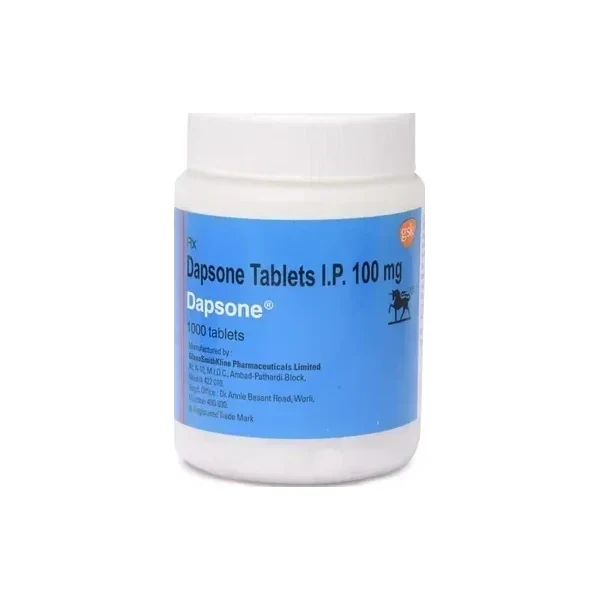
1. Description of Dapsone 100 mg
Dapsone 100 mg is an oral medicine used to treat Leprosy and certain doctor-diagnosed skin infections or inflammatory skin conditions. Each Dapsone 100 mg oral tablet contains Dapsone 100 mg as the active salt, and it belongs to the Sulfone class of antileprosy medicines.
GlaxoSmithKline Pharmaceuticals Ltd manufactures Dapsone 100 mg tablets in GMP-compliant facilities that adhere to strict quality standards. The Dapsone salt is FDA-approved, and the medicine is produced in WHO-GMP-aligned facilities to support quality, safety, and dose consistency.
This medicine works by stopping bacteria from making folic acid, which bacteria need for growth. The main uses of Dapsone tablets include the treatment of Leprosy and selected indications advised by a doctor.
The usual Dapsone 100 mg dosage depends on the condition, age, medical history, and treatment response. A person should follow the doctor’s dosage instructions and take Dapsone tablets at the same time each day as advised.
If a dose is missed, the person should take it when remembered, unless the next dose is close. In case of overdose, consult a doctor or seek medical help, especially if breathing trouble, severe weakness, confusion, or blue lips appear.
Common Dapsone 100 mg side effects include nausea, headache, dizziness, rash, tiredness, and loss of appetite. Consult a doctor if a severe rash, yellow skin, dark urine, unusual bleeding, fever, or breathing difficulty occurs.
People with G6PD deficiency, Anemia, liver disease, lung disease, heart disease, or Sulfone allergy should consult a doctor before use. Inform the doctor about antibiotics, Malaria medicines, blood-related medicines, or other ongoing treatments.
Store Dapsone tablet oral medicine at room temperature, away from heat, moisture, and direct sunlight. Keep it out of children’s reach.
Dapsone 100 mg is used to treat Leprosy and Dermatitis Herpetiformis. Doctors can also use it in selected cases to prevent Pneumocystis Pneumonia in people with weakened immune systems. Its use depends on the diagnosed condition and medical advice.
Dapsone is an antibiotic, not a steroid. It belongs to the Sulfone class and helps slow bacterial growth by blocking folic acid production inside bacteria. It also has anti-inflammatory effects in some skin conditions, but does not work like corticosteroid medicines.
People allergic to Dapsone or Sulfone medicines should not take Dapsone 100 mg unless a doctor advises it. It can also be unsuitable for individuals with severe Anemia, G6PD deficiency, serious liver disease, or past blood-related medicine reactions.
Dapsone 100 mg can be taken during the day or at night, as advised by the doctor. The important point is to take it at the same time every day. This helps maintain steady medicine levels in the body.
2. How Dapsone 100 mg Works
Dapsone 100 mg contains Dapsone, a sulfone antileprosy medicine. It works by stopping bacteria from making folic acid, which they need to grow and multiply. This action helps control infection and supports symptom relief when the antibiotic is taken as advised by a doctor.
This mechanism delivers several health advantages:
- Supports Leprosy treatment: Dapsone helps control the bacteria that cause Leprosy when used with other medicines advised by a doctor.
- Helps manage Dermatitis Herpetiformis: This medicine can help reduce itching, burning, and blister-like skin symptoms linked to this chronic skin condition.
- Supports infection prevention in selected cases: Doctors can advise Dapsone to help prevent Pneumocystis Pneumonia in individuals with weak immunity when suitable.
Consult a doctor before taking Dapsone. The dose and schedule depend on the condition being treated and the patient's medical history. General instructions for taking this medication include:
- Take Dapsone at the same time each day, as advised by your doctor, to maintain stable medication levels in your body.
- Swallow the tablet whole with a full glass of water. Do not crush, chew, or break it.
- Take this medicine with or without food; taking it with meals helps reduce the risk of stomach upset.
- Do not take more than the advised dose or stop treatment without medical guidance.
3. Mechanism of Action
At the cellular and biochemical level, Dapsone interacts selectively with specific physiological receptors and enzymatic pathways responsible for regulating targeted therapeutic pathways.
By modulating these targeted pathways, Dapsone 100 mg restores balanced physiological response without unnecessary systemic burden when taken at the physician-recommended dose.
4. Dosage and Administration of Dapsone 100 mg
4.1 Recommended Dosage
The standard medical recommendation for Dapsone 100 mg Tablet is tailored according to patient tolerance, therapeutic response, and clinical evaluation. Always adhere to professional healthcare provider recommendations to minimize adverse events.
4.2 How to Take
- Swallow the tablet or capsule whole with a full glass of plain water.
- Can be taken with or without food, unless advised otherwise by your doctor.
- Avoid heavy, high-fat meals immediately prior to consumption for optimal absorption.
- Do not crush, chew, or split the tablet unless specifically designed as chewable or dispersible.
4.3 When to Take
Take Dapsone 100 mg strictly according to the schedule prescribed by your healthcare provider. Do not exceed more than one prescribed dose within a 24-hour window.
4.4 Who Can Use
✔ Suitable For:
- Adult patients diagnosed with conditions requiring Dapsone.
- Individuals evaluated by a licensed healthcare provider for Shop All Medicines therapy.
- Patients with verified tolerance to the prescribed strength.
✖ Not Suitable For:
- Individuals with known hypersensitivity or allergy to Dapsone.
- Patients taking contraindicated or interacting therapies without physician approval.
- Patients with unstable cardiovascular, severe hepatic, or renal conditions unless cleared by a specialist.
- Pediatric patients under 18 years unless explicitly prescribed.
5. Side Effects and Warnings
While Dapsone 100 mg is clinically evaluated and well-tolerated, systemic physiological responses may vary:
Like any medicine, Dapsone can cause mild side effects in some individuals. These effects often improve as the body adjusts to the medicine. Consult a doctor if they last or worsen:
- Nausea
- Headache
- Dizziness
- Loss of appetite
- Skin rash
6. Precautions & Drug Interactions
Liver Disease
Dapsone 100 mg should be used with caution in individuals with liver disease. The liver helps process Dapsone, so existing liver problems can increase the risk of liver-related side effects, including Jaundice. A doctor can advise liver function tests during treatment.
Kidney Impairment
Dapsone should be used with caution in individuals with kidney impairment. Reduced kidney function can impact how the body clears the medicine, potentially increasing side effects. A doctor can adjust the dose or advise monitoring during treatment.
Pregnant and Breastfeeding women
Dapsone 100 mg is not considered fully safe during pregnancy or breastfeeding unless a doctor finds it necessary. Dapsone can cross the placenta and be excreted in breast milk, so a doctor should review the benefits and potential risks before prescribing.
Avoid
Individuals with Dapsone allergy, Sulfone allergy, severe Anemia, or Glucose-6-Phosphate Dehydrogenase (G6PD) deficiency should avoid this medicine unless a doctor advises it. Alcohol should be avoided during treatment with Dapsone, as it can increase dizziness and add strain on the liver. Strong sun exposure should also be limited, and all current medicines should be shared with a doctor to check for possible interactions.
7. Storage and Handling
Store Dapsone 100 mg Tablet blister packs at controlled room temperature between 15°C to 30°C (59°F to 86°F). Keep protected from excessive heat, bathroom moisture, and direct sunlight. Retain in original factory packaging until consumption and keep strictly out of reach of children and pets.
8. Frequently Asked Questions (FAQs)
Q: What is the active ingredient in Dapsone 100 mg?
A: Dapsone 100 mg is formulated with Dapsone as its active pharmaceutical ingredient and is manufactured in WHO-GMP certified pharmaceutical facilities.
Q: How should I store Dapsone 100 mg safely?
A: Keep the medicine in its original moisture-resistant blister pack at room temperature (15°C–30°C), away from direct sunlight and out of reach of children.
Q: Can I order Dapsone 100 mg with discreet international shipping?
A: Yes. MyEdKart ships all orders in plain, tamper-evident packaging with live tracking numbers provided upon dispatch.
Q: Can Dapsone 100 mg help with severe inflammatory Acne in selected cases?
A: Yes, Dapsone 100 mg can help with severe inflammatory Acne in selected cases. Doctors usually reserve oral Dapsone for Acne that does not respond to standard treatments. Topical Dapsone gel is more commonly used, while oral tablets need close medical supervision.
Q: Can Dapsone help reduce itching in Dermatitis Herpetiformis when prescribed by a doctor?
A: Yes, Dapsone can help reduce itching in Dermatitis Herpetiformis when prescribed by a doctor. It helps control the skin inflammation linked to this condition. However, itching from allergies, infections, or other skin problems can require different treatment.
Q: Is Dapsone a standard medicine for Tuberculosis (TB)?
A: No, Dapsone is not a standard medicine for Tuberculosis (TB). TB needs specific anti-tuberculosis medicines prescribed by a doctor. Dapsone is mainly used for Leprosy, Dermatitis Herpetiformis, and selected infections in people with weakened immune systems.
Q: Can Dapsone 100 mg Tablet affect liver function?
A: Yes, Dapsone can be a high-risk medication for some individuals because it can affect blood cells and oxygen levels. Doctors may advise regular blood tests during treatment, especially for long-term use or people with Anemia, Glucose-6-Phosphate Dehydrogenase (G6PD) deficiency, or liver problems.