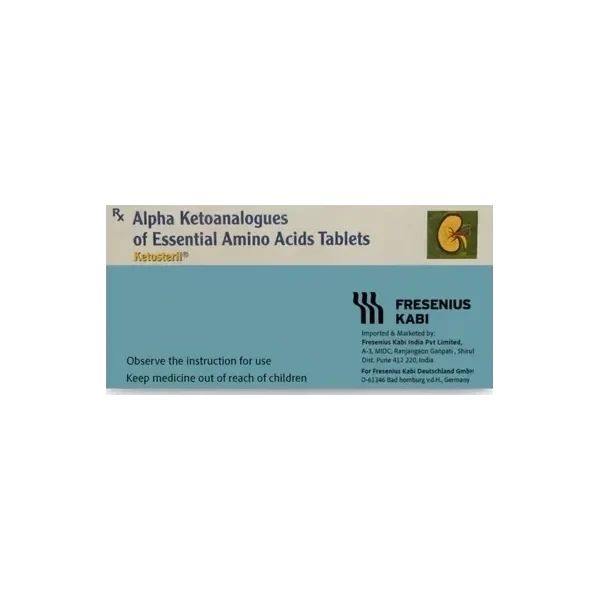
1. Description of Ketosteril
Ketosteril tablet is used as part of the conservative management of Chronic Kidney Disease (CKD) to support nutrition and help slow disease progression in patients following a low-protein diet. It contains a mixture of essential amino acids and their keto- and hydroxy-analogues, along with calcium salts, as the active components.
Ketosteril belongs to the drug class of keto-analogues of essential amino acids used in CKD with protein restriction. It is a product manufactured by Fresenius Kabi under GMP-WHO-certified standards.
The keto-analogues in Ketosteril are converted in the body into essential amino acids by using nitrogen already present in non-essential amino acids. This process supplies needed proteins without increasing nitrogen waste, helping reduce urea buildup, uremic toxins, and stress on remaining kidney function. Ketosteril is mainly used in CKD patients not yet on dialysis to correct disordered protein metabolism, maintain nutritional status, and delay progression to end-stage renal disease when combined with a low-protein diet.
Ketosteril tablets are taken orally with meals. A typical adult dose is 4 to 8 tablets per time, divided into 3 to 4 doses. The treatment is long-term and must be supervised by a nephrologist. In case of overdose, excess calcium intake may cause hypercalcemia; stop the medicine and seek medical advice. If a dose is missed, take it with the next meal unless it is close to the next scheduled dose.
Common side effects include nausea, vomiting, abdominal discomfort, and signs of Hypercalcemia (high calcium levels). Seek help for severe weakness, confusion, constipation, or allergic reactions. Use caution in hypercalcemia and with other calcium-containing medicines.
Store Ketosteril at room temperature, away from heat, moisture, and children.
Ketosteril doesn't directly lower creatinine but helps protect residual kidney function and slow CKD progression. This can stabilize kidney function and prevent further increases in creatinine when used with a low-protein diet under medical supervision.
Before taking Ketosteril, talk to your doctor about your kidney function, current protein intake, and any history of high calcium or phosphate levels. Also mention all other medications, supplements, or conditions to avoid interactions and ensure safe, effective use.
2. How Ketosteril Works
Ketosteril tablet plays an essential role in the conservative management of Chronic Kidney Disease, especially in patients following a low-protein diet. Its benefits extend beyond nutrition support to overall metabolic and renal protection.
- Reduces uremic symptoms: Ketosteril helps lower the buildup of toxic by-products of protein metabolism, which are responsible for many uremic symptoms such as nausea, fatigue, and poor appetite.
- Preserves remaining kidney function: By reducing nitrogen load and metabolic stress on the kidneys, it helps slow the progression of chronic kidney disease and may delay the need for dialysis.
- Maintains nutritional status: Ketosteril supplies essential amino acids without increasing protein waste, allowing patients to maintain good nutrition even with a significantly reduced daily protein intake.
- Improves metabolic balance: It supports better control of complications related to renal insufficiency, including proteinuria and disturbances in calcium-phosphate balance, as well as carbohydrate and lipid metabolism.
Ketosteril tablet is a prescription-only medication that patients should take under medical supervision. However, here are some general guidelines on its proper use and intake.
- Take the dose and duration as directed by the doctor.
- You can take the tablets with food.
- Swallow the tablets whole with water. Do not crush, chew or break it.
- Take it at the same time daily for optimal results.
3. Mechanism of Action
At the cellular and biochemical level, Alpha Ketoanalogue interacts selectively with specific physiological receptors and enzymatic pathways responsible for regulating targeted therapeutic pathways.
By modulating these targeted pathways, Ketosteril restores balanced physiological response without unnecessary systemic burden when taken at the physician-recommended dose.
4. Dosage and Administration of Ketosteril
4.1 Recommended Dosage
The standard medical recommendation for Ketosteril Tablet is tailored according to patient tolerance, therapeutic response, and clinical evaluation. Always adhere to professional healthcare provider recommendations to minimize adverse events.
4.2 How to Take
- Swallow the tablet or capsule whole with a full glass of plain water.
- Can be taken with or without food, unless advised otherwise by your doctor.
- Avoid heavy, high-fat meals immediately prior to consumption for optimal absorption.
- Do not crush, chew, or split the tablet unless specifically designed as chewable or dispersible.
4.3 When to Take
Take Ketosteril strictly according to the schedule prescribed by your healthcare provider. Do not exceed more than one prescribed dose within a 24-hour window.
4.4 Who Can Use
✔ Suitable For:
- Adult patients diagnosed with conditions requiring Alpha Ketoanalogue.
- Individuals evaluated by a licensed healthcare provider for Shop All Medicines therapy.
- Patients with verified tolerance to the prescribed strength.
✖ Not Suitable For:
- Individuals with known hypersensitivity or allergy to Alpha Ketoanalogue.
- Patients taking contraindicated or interacting therapies without physician approval.
- Patients with unstable cardiovascular, severe hepatic, or renal conditions unless cleared by a specialist.
- Pediatric patients under 18 years unless explicitly prescribed.
5. Side Effects and Warnings
While Ketosteril is clinically evaluated and well-tolerated, systemic physiological responses may vary:
This supplement is generally well-tolerated when taken as prescribed in patients with CKD. However, one may experience mild side effects that usually resolve as the body adjusts to the medication. Some common Ketosteril tablet side effects:
- Nausea
- Vomiting
- High calcium levels
- Stomach discomfort
If these side effects continue or worsen, talk to your doctor immediately.
6. Precautions & Drug Interactions
Liver Disease
Limited information is available on its interaction with liver disease. Thus, consult a doctor for safe and effective use.
Kidney Impairment
This medication is intended for chronic kidney disease; thus, it is safe to use. However, consult a doctor for any potential dose adjustments and regular monitoring.
Pregnant and Breastfeeding women
Limited information is available for its interaction with pregnancy and breastfeeding. Thus, it is essential that you consult a doctor before taking this medication to prevent potential complications.
Avoid
Avoid taking this medication if you are allergic to any of its ingredients. Also, avoid excessive alcohol as it can increase the risk of side effects.
Yes, Ketosteril can interact with other calcium-containing products (such as supplements or phosphate binders) and certain medicines, such as Tetracyclines, Quinolones, or Levothyroxine, which may reduce their absorption. Always space these medications several hours apart and inform your doctor of all drugs you are taking.
7. Storage and Handling
Store Ketosteril Tablet blister packs at controlled room temperature between 15°C to 30°C (59°F to 86°F). Keep protected from excessive heat, bathroom moisture, and direct sunlight. Retain in original factory packaging until consumption and keep strictly out of reach of children and pets.
8. Frequently Asked Questions (FAQs)
Q: What is the active ingredient in Ketosteril?
A: Ketosteril is formulated with Alpha Ketoanalogue as its active pharmaceutical ingredient and is manufactured in WHO-GMP certified pharmaceutical facilities.
Q: How should I store Ketosteril safely?
A: Keep the medicine in its original moisture-resistant blister pack at room temperature (15°C–30°C), away from direct sunlight and out of reach of children.
Q: Can I order Ketosteril with discreet international shipping?
A: Yes. MyEdKart ships all orders in plain, tamper-evident packaging with live tracking numbers provided upon dispatch.
Q: Can Ketosteril improve the quality of life in CKD patients by reducing uremic symptoms such as fatigue, nausea, and poor appetite?
A: Yes, Ketosteril can improve the quality of life in CKD patients by reducing uremic symptoms such as fatigue, nausea, and poor appetite. It also helps maintain nutritional status and slows disease progression, supporting more comfortable daily living.
Q: Should Ketosteril always be taken with meals?
A: No, Ketosteril should always be taken with meals. Taking it with food helps the body properly use the keto-analogues for protein metabolism, maximizing their benefits while reducing gastrointestinal discomfort.
Q: Is Ketosteril Tablet safe for patients with kidney problems?
A: No, Chronic Kidney Disease (CKD) cannot be fully reversed. However, its progression can be slowed or managed through lifestyle changes, dietary control, medications like Ketosteril, and careful monitoring to preserve kidney function and reduce complications.
Q: Is Ketosteril Tablet safe for patients with kidney problems (Alpha Ketoanalogue guidance)?
A: Yes, Ketosteril is usually taken long-term as part of conservative management of chronic kidney disease, under the supervision of a nephrologist. The duration depends on kidney function, dietary management, and treatment goals. Therapy continues as long as a low-protein diet is followed and non-dialytic management of CKD is appropriate.