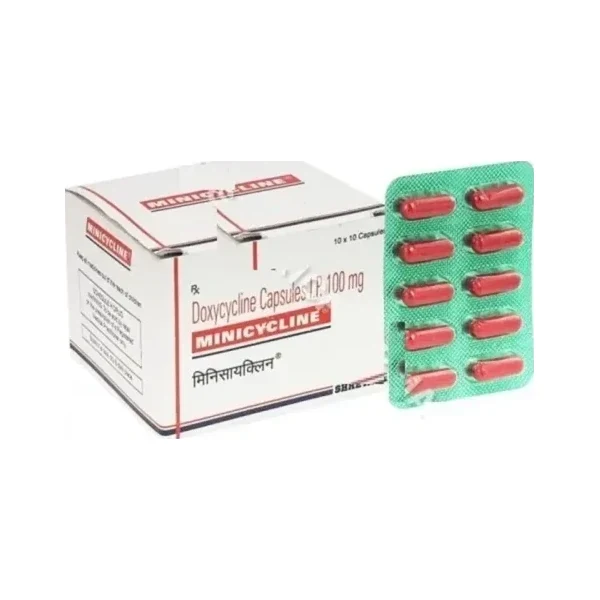
1. Description of Minicycline
Minicycline Capsule is a prescription antibiotic used to treat a range of susceptible bacterial infections. It contains 100 mg Doxycycline, an FDA-approved tetracycline antibiotic. This bacterial infection treatment capsule is manufactured in a GMP-compliant facility by Shreya Life Sciences Pvt. Ltd.
This antibiotic functions by blocking bacterial protein synthesis at the 30S ribosomal subunit, thereby preventing their growth and aiding the immune system in clearing the infection. It is mainly prescribed to treat acne, respiratory tract infections, Urinary Tract Infections (UTIs), skin diseases, and specific cases of Sexually Transmitted Infections (STIs).
Common adult dosing ranges from 100 mg once or twice daily, depending on the severity and type of the infection. If a dose is missed, take it as soon as you recall, but skip it unless it is near the next dose; do not double it. In case of overdose, get immediate medical attention if you notice severe dizziness, nausea, and persistent Diarrhea.
Potential side effects include nausea, vomiting, Diarrhea, sensitivity to sunlight, dizziness, and throat irritation. Obtain urgent medical help if severe allergic reactions, persistent vomiting, or vision changes occur.
Doxycycline is contraindicated in pregnancy, breastfeeding, and children under 8 years due to tooth discoloration and bone effects. Avoid use in tetracycline allergy, inflammatory conditions like Asthma or Lupus, severe liver impairment, and with isotretinoin or retinoids due to the risk of Intracranial Hypertension. Store the capsule at room temperature, away from moisture and direct heat.
Minicycline Capsules contain Doxycycline, a tetracycline antibiotic used to treat bacterial infections such as acne, respiratory tract infections, Urinary Tract Infections, and certain skin infections.
Minicycline Capsules can be taken with or without food, but taking them with food could help reduce stomach upset. However, avoid taking them with milk, dairy products, antacids, or calcium supplements, as these can reduce their absorption and effectiveness.
Completing the full course of Minicycline helps ensure all infection-causing bacteria are fully eliminated from the body. Stopping treatment early allows bacteria to survive, increasing the risk of recurrent infection, reduced treatment effectiveness, and the possibility of developing antibiotic resistance.
2. How Minicycline Works
Doxycycline in Minicycline is a tetracycline-class antibiotic that works by stopping the growth and spread of bacteria. It blocks bacterial protein synthesis, helping the body fight infections effectively.
Benefits of taking this capsule include:
- Helps treat moderate to severe bacterial infections of the skin, respiratory tract, and urinary tract, as well as certain Sexually Transmitted Infections.
- Reduces acne-causing bacteria and skin inflammation.
- Supports faster healing of infected skin lesions.
- Provides long-lasting antibacterial action when taken as prescribed.
To ensure maximum efficacy, take this medicine for respiratory and Urinary Tract Infections precisely as directed by your healthcare provider. Some general usage guidelines include:
- Take Minicycline 100 mg capsule at the same time every day to maintain consistency.
- Swallow the capsule whole with water, rather than crushing or chewing.
- Take with or without food; taking it after meals may help reduce stomach upset.
- The standard dose is one 100 mg pill every 12 hours on day one, followed by 50 mg or 100 mg daily, as advised by your doctor.
3. Mechanism of Action
At the cellular and biochemical level, Doxycycline interacts selectively with specific physiological receptors and enzymatic pathways responsible for regulating targeted therapeutic pathways.
By modulating these targeted pathways, Minicycline restores balanced physiological response without unnecessary systemic burden when taken at the physician-recommended dose.
4. Dosage and Administration of Minicycline
4.1 Recommended Dosage
The standard medical recommendation for Minicycline Capsule is tailored according to patient tolerance, therapeutic response, and clinical evaluation. Always adhere to professional healthcare provider recommendations to minimize adverse events.
4.2 How to Take
- Swallow the tablet or capsule whole with a full glass of plain water.
- Can be taken with or without food, unless advised otherwise by your doctor.
- Avoid heavy, high-fat meals immediately prior to consumption for optimal absorption.
- Do not crush, chew, or split the tablet unless specifically designed as chewable or dispersible.
4.3 When to Take
Take Minicycline strictly according to the schedule prescribed by your healthcare provider. Do not exceed more than one prescribed dose within a 24-hour window.
4.4 Who Can Use
✔ Suitable For:
- Adult patients diagnosed with conditions requiring Doxycycline.
- Individuals evaluated by a licensed healthcare provider for Antibiotics therapy.
- Patients with verified tolerance to the prescribed strength.
✖ Not Suitable For:
- Individuals with known hypersensitivity or allergy to Doxycycline.
- Patients taking contraindicated or interacting therapies without physician approval.
- Patients with unstable cardiovascular, severe hepatic, or renal conditions unless cleared by a specialist.
- Pediatric patients under 18 years unless explicitly prescribed.
5. Side Effects and Warnings
While Minicycline is clinically evaluated and well-tolerated, systemic physiological responses may vary:
Temporary and mild side effects associated with this Tetracycline antibiotic capsule include:
- Nausea
- Vomiting
- Diarrhea
- Rash
- Reduced appetite
These usually tend to disappear with time, as your body adapts to the medication. If they remain longer or intensify, contact your medical provider for further assistance.
Common side effects of Doxycycline capsules include nausea, vomiting, Diarrhea, stomach pain, loss of appetite, and sensitivity to sunlight. These side effects are temporary, but get medical help if they persist or worsen.
6. Precautions & Drug Interactions
Liver Disease
Patients with liver disease should use Doxycycline capsules cautiously under medical supervision. Dose adjustments and frequent monitoring are needed in severe liver impairment, as excessive use can increase the risk of liver-related side effects and toxicity.
Kidney Impairment
Patients with kidney disease can usually take this antibiotic medicine for bacterial infections because it is primarily eliminated through the digestive tract rather than the kidneys. However, dosage and use should still be monitored by a healthcare provider in severe renal impairment.
Pregnant and Breastfeeding women
Doxycycline capsules are generally not recommended during pregnancy, as they could affect the baby’s bone and tooth development, mainly during the second and third trimesters. Breastfeeding women should use them only under medical supervision, as small amounts of the medicine can pass into breast milk.
Avoid
Avoid consuming alcohol while taking this Doxycycline 100 mg capsule, as it could increase dizziness, stomach discomfort, and reduce the body’s ability to recover from infection effectively. Keep a 2-hour gap from antacids or supplements containing iron, calcium, zinc, or magnesium because these can reduce Doxycycline absorption.
7. Storage and Handling
Store Minicycline Capsule blister packs at controlled room temperature between 15°C to 30°C (59°F to 86°F). Keep protected from excessive heat, bathroom moisture, and direct sunlight. Retain in original factory packaging until consumption and keep strictly out of reach of children and pets.
8. Frequently Asked Questions (FAQs)
Q: What is the active ingredient in Minicycline?
A: Minicycline is formulated with Doxycycline as its active pharmaceutical ingredient and is manufactured in WHO-GMP certified pharmaceutical facilities.
Q: How should I store Minicycline safely?
A: Keep the medicine in its original moisture-resistant blister pack at room temperature (15°C–30°C), away from direct sunlight and out of reach of children.
Q: Can I order Minicycline with discreet international shipping?
A: Yes. MyEdKart ships all orders in plain, tamper-evident packaging with live tracking numbers provided upon dispatch.
Q: Can Minicycline help treat acne and pimples by reducing acne-causing bacteria and controlling skin inflammation?
A: Yes, Minicycline can help treat acne and pimples by reducing acne-causing bacteria and controlling skin inflammation. It is commonly prescribed for moderate to severe acne and helps decrease redness, swelling, and the formation of new breakouts with regular use.
Q: Is Minicycline Capsule an antibiotic?
A: Yes, Minicycline can be used for certain Urinary Tract Infections caused by susceptible bacteria, but it is not usually the first-choice treatment. Doctors usually prescribe it only when culture reports confirm bacterial sensitivity or when other antibiotics are unsuitable or ineffective.
Q: Is Minicycline Capsule an antibiotic (Doxycycline guidance)?
A: Yes, Minicycline can be used long-term, but only under medical supervision, mainly for conditions like acne or chronic bacterial infections. However, prolonged use should be monitored strictly, as it could increase the risk of side effects such as skin discoloration, dizziness, liver problems, or antibiotic resistance.